


We earn a commission if you buy through links on this site, at no extra cost to you. Our scores are not paid for, and we include products we don't recommend.
Okinawa, a chain of islands in southern Japan, is known for having many people who live into their nineties and beyond. Researchers have spent decades studying the traditional Okinawan way of eating. Its lessons for weight control are simple, practical and do not depend on any special product.
What Okinawans traditionally ate
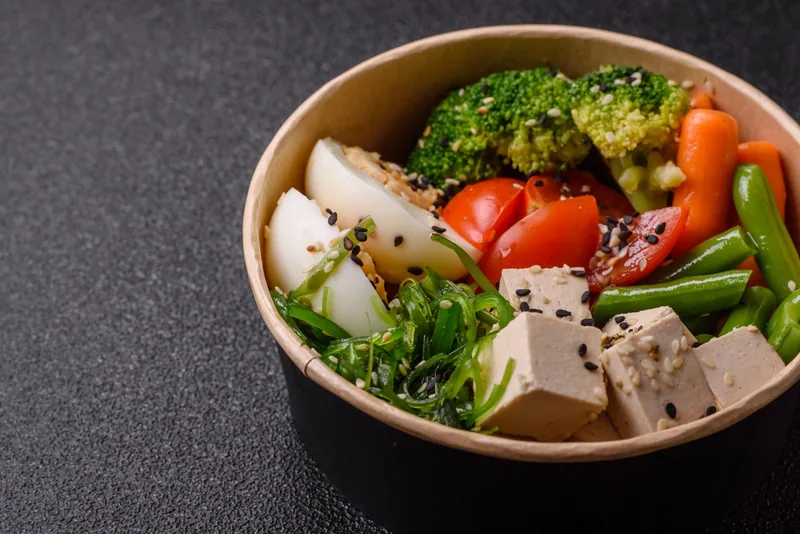
The traditional Okinawan diet was built mostly on plants. Sweet potatoes were a staple, often eaten in place of rice. Meals included plenty of green and yellow vegetables, seaweed, soy foods such as tofu and miso, and small amounts of fish and pork.
Compared with a typical Western diet, it was low in calories for its volume, high in fiber and low in sugar and highly processed food. Older generations ate this way largely out of necessity rather than choice. Many younger Okinawans now eat a more Western diet, and researchers have noted that the health advantage has narrowed as habits have changed.
Lesson one: eat foods that fill you for fewer calories
Vegetables, sweet potatoes, legumes and soups are high in water and fiber. They take up room in your stomach and keep you full without many calories. This idea, often called energy density, is one of the most reliable tools for weight control.
You do not need Okinawan ingredients to use it. Any vegetable-rich, whole-food diet works on the same principle. The The Mediterranean Diet plan, for example, uses vegetables, beans, whole grains and olive oil in a similar way, and the Mediterranean eating style has a large body of independent research behind it.
- Fill half your plate with vegetables
- Swap some refined grains for potatoes, beans or whole grains
- Start meals with a vegetable soup or salad
- Keep sweets and fried snacks occasional
Lesson two: stop before you are full
Okinawan elders are often linked with the saying 'hara hachi bu', which means eating until you are about 80 percent full. It is a habit, not a rule, and it works because the feeling of fullness lags behind eating.
To try it, eat more slowly, put your fork down between bites and pause before taking seconds. Many people find that the urge for more fades after a few minutes.
Lesson three: movement and community count too
Traditional Okinawan life involved a lot of daily movement, such as farming, walking and gardening, rather than formal exercise. Strong social ties were also common. Long-lived populations around the world tend to share these features.
For weight control, this is a useful reminder. Regular low-level activity, such as walking after meals, adds up over a year. Eating with others, cooking at home and having a sense of purpose all make healthy habits easier to keep.
Lesson four: keep it simple and steady
The traditional Okinawan diet was not a short program with a start and end date. It was simply how people ate, year after year. That is the most important lesson for weight control. A pattern you can keep for a decade beats a strict plan you abandon after a month.
Rather than copying every detail, pick two or three habits and practice them until they feel normal. You might add a vegetable to every meal, cook beans or soup once a week, and stop eating when you feel comfortably satisfied. Small, repeated choices are what made the Okinawan pattern work. Once those habits are settled, add another. Progress may feel slow, but steady changes are far more likely to last than a dramatic overhaul.
Where products fit
The Okinawan story has been used to sell many things. Okinawa Flat Belly Tonic is one well-known example: a morning drink powder with plant extracts and probiotics. It can be a pleasant daily ritual, but the formula itself has not been tested in independent weight-loss trials. The real Okinawan advantage came from what people ate every day and how they lived, not from a drink.
If you want structure, a full eating plan is more likely to change your results than a tonic. A personalized plan such as The Mediterranean Diet gives you recipes and portions built on the same plant-forward principles. If you also enjoy the tonic, treat it as an extra, not the main event. Check the label for allergens and speak to your doctor if you take medication.
Key takeaways
- ✓The traditional Okinawan diet was plant-based, high in fiber and low in sugar.
- ✓Foods that fill you for fewer calories make weight control easier.
- ✓Eating until about 80 percent full is a simple, useful habit.
- ✓Daily movement and social ties matter as much as any product.
Frequently asked questions
Do I need to eat Japanese food to follow these lessons?
No. The principles of mostly plants, whole foods and moderate portions apply to any cuisine.
Is the Okinawa diet the same as the Mediterranean diet?
They are different traditions, but both emphasize vegetables, legumes and whole foods, with limited processed food and red meat.
Health note. This guide is general information, not medical advice. Speak with your doctor before changing your diet, fasting, or starting a supplement, especially if you take medication or are pregnant.